













Recebi hoje esse boletim da Caribbean Risk Managers Limited sobre o Sandy, que traz informações muito interessantes. Todos falam muito dos estragos em Nova York, Atlantic City ou New Jersey. Mas Jamaica, Haiti, Bahamas e República Dominicana sofreram perdas relevantes. Com certeza poucos têm seguro. A começar pelo governo, que deverá sacrificar verba de benefícios, ou não, para socorrer a população atingida. Se socorrer, vai tirar verba de projetos prioritários. Se não socorrer, sofrerá com a queda de impostos e recuo do PIB. Isso mostra o quanto o seguro é importante para uma nação.
Fora esse estudo sobre o Caribe, vários outros chegaram aos acionistas sobre as perdas geradas pela passagem do Sandy. Todos estão preocupados se as seguradoras terão recursos suficientes para pagar as indenizações e os dividendos prometidos. Pelo relato dos executivos em entrevistas as agências internacionais, sim. Está tudo sob controle.
A AIR Worldwide prevê que as seguradoras e resseguradoras vão ter de desembolsar algo entre US$ 7 bilhões e US$ 15 bilhões em indenizações. Já a Fitch acredita que o Sandy deverá gerar um volume de indenizações similar ao furacão Irene, que atingiu a costa leste em 2011 e gerou perdas seguradas de US$ 4 bilhões a US $ 5 bilhões De acordo com o estudo, boa parte do risco será arcado pelas principais seguradoras americanas, como State Farm, Allstate e Liberty Mutual Group. Já segundo um estudo divulgado pel PwC, as perdas econômicas geradas pela fúria do Sandy chegarão a US$ 45 bilhões, sendo algo próximo de US$ 10 bilhões com cobertura de apólices de seguro.
Segue a íntegra, em inglês.
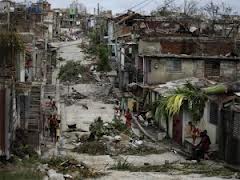
Tropical Cyclone Sandy made its first landfall on the eastern part of the south coast of Jamaica (just east of Kingston) at approximately 3 pm EST (1900 UTC) on 24 October 2012 as a Category 1 Hurricane with maximum sustained winds of 80 mph (130 km/h). At approximately 5 am (0900 UTC) on the following day the hurricane warning for Jamaica was discontinued.
This system then passed to the west of Haiti during the night of the 24 October and affected the western end of the southwestern peninsula with weak Tropical Storm force winds (wind speeds of between 39 and 50 mph). At 11 am EST (1500 UTC) on the following day the Tropical Storm Warning for Haiti was discontinued.
After impacting Jamaica and Haiti, Hurricane Sandy made a second landfall just west of Santiago de Cuba (eastern Cuba) at approximately 1.25 am EST (0525 UTC) on 25 October as a Category 2 storm with maximum sustained winds of 110 mph (175 km/h) and travelling at a forward speed of 15 mph (24 km/h). By 11 am (1500 UTC) the Hurricane Warning for Cuba was discontinued. Sandy emerged off the northeastern coast of Cuba with maximum sustained winds of 105 mph (165 km/h) and a forward speed of 18 mph (30 km/h).
As at 2 pm (1800 UTC) on 25 October Sandy was a Category 2 Hurricane as it approached the Bahamas with maximum sustained winds still at 105 mph (165 km/h) and moving in a northerly direction at a speed of 20 mph (32 km/h). Approximately 9 hours later Sandy was downgraded to a Category 1 Hurricane as it passed near Eleuthera Island in the northwestern Bahamas.
By 2 pm EST (1800 UTC) the following day, maximum sustained winds had decreased to near 75 mph (120 km/h) and hurricane force winds extended outward only around 35 miles (55 km) and tropical storm force winds extended outward up to 275 miles (445 km).
All Tropical Storm warnings for the Bahamas were discontinued at approximately 5 pm EST (2100 UTC) on 27 October as Sandy moved away from the Caribbean Basin as a Category 1 storm and headed towards the mid-Atlantic and northeastern coast of the US.
As a result of the passage of Sandy across eastern Jamaica there were reports of damage to crops, roads, bridges and houses in the parishes of St. Mary, St. Thomas and Portland. Sandy brought strong winds, reaching hurricane force to the east of Kingston and in higher areas of the Blue Mountains, and heavy rains which caused flooding in all of the eastern parishes. Reports indicate that 1,046 persons occupied 67 hurricane shelters across the island.
Storm surge and heavy seas affected waterfront houses situated in the eastern Kingston neighbourhood of Caribbean Terrace. The Jamaica Public Service Company worked to restore power as 70 percent of its customer base was without electricity. Preliminary assessments suggest that damage was occasioned to approximately 200 utility poles, 240 spans of power lines as well as other components of electrical infrastructure. By 10 am on 25 October power had been restored to over 60% of those affected.
Preliminary estimates from the Ministry of Agriculture indicate that approximately 11,000 farmers were affected and about 1,500 hectares of crops destroyed which could amount to $1 billion (US$11 million) in damage. These preliminary estimates do not include livestock.
Disaster coordinators in the parish of St. Elizabeth received reports of fallen trees causing temporary blockages to the main road between Holland Bamboo Avenue and Black River. The Office for Disaster Preparedness and Emergency Management (ODPEM) stated that initial reports seem to indicate that land slippage may be “parish-wide” for the parish of Portland. ODPEM is presently attempting to assist residents of Portland who are marooned as a result of the Yallahs River being in spate. Affected communities include Cane River, Drummond to Habberstadt, Robertsfield, Halls Delight and East Portland.
There has been one confirmed fatality in Jamaica as a result of Sandy. While estimates of the full economic impact are not yet available, the insurance sector anticipates losses to be in the low 10s of millions of US dollars.
 Cuba
Cuba
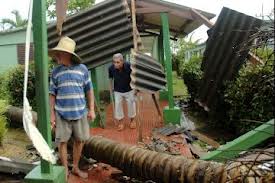
The municipalities which were severely affected by the storm were Mayari, Banes, Antilla, Rafael Freyre, Baguano Urbano Noris, Sagua de Tanamo and Cuerto. Heavy rains and high winds damaged houses, coffee and tomato crops as this storm crossed the entire eastern region without losing intensity when passing over land which was unusual. Reports indicate that approximately 137,000 homes in Santiago were damaged of which 43,000 lost their roof and 15,000 totally collapsed. In Holguin approximately 17,000 homes were damaged and there was significant loss to crops and livestock.
Damage to crops in Granma Province does not appear to be as bad as initially expected. There were reports of fallen palm trees and utility poles which made some roads impassable. Flooding over the summer in the Granma Province resulted in the contamination of wells which led to a cholera outbreak and the torrential rainfall from Sandy could hinder attempts to contain the spread of this disease.
Approximately 15,200 persons (5,000 tourists and 10,200 residents) in Holguin and a further 3,000 in Las Tunas were evacuated prior to the arrival of the storm. Cuban officials indicated that at least 55,000 people had been evacuated in response to expected flooding from this system. The Cuban Weather Service advised that a weather station on Gran Pierda which is situated near Santiago de Cuba recorded gusts up to 152 mph (245 km/h).
There are reports of 11 fatalities as a result of the passage of this storm and preliminary losses are estimated at $2.1 billion pesos.

 Haiti
Haiti
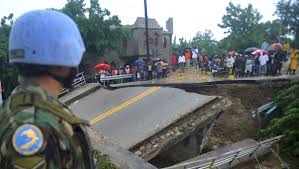
The rain laden outer bands of Hurricane Sandy triggered extensive flooding which resulted in widespread damage to homes and crops. Affected areas include farms in Ille a Vache, homes in the fishing village of Tiburon and Les Cayes, where 50 patients were evacuated from a hospital along with 200 residents from a coastal settlement. More than 10,000 people were displaced and thousands of homes were destroyed or damaged as a result of the passage of this storm. The Prime Minister has advised that the entire south of the country is under water.
The city of Les Cayes experienced approximately 27 inches of rain over a 24 hour period and Sandy appears to have dumped more rain than tropical storms Isaac and Tomas which affected similar parts of Haiti in August 2012 and October 2010 respectively.

The road which provides access to Les Anglais which is a small fishing village located in the south is impassable. There is the possibility that homes situated in this community may have been washed out to sea. Rivers were still rising in some communities such as Leogane as a result of excess runoff originating from the hillside.
The impact of Sandy may also serve to exacerbate the spread of the cholera epidemic which is
affecting Haiti as 16 new cases had already been recorded since the passage of the storm. Reports indicate that there were 51 fatalities as a result of this storm and 15 missing at this time. Authorities are still conducting their preliminary assessments as they have not been able to reach many of the affected areas due to the condition of the access road.

 Bahamas
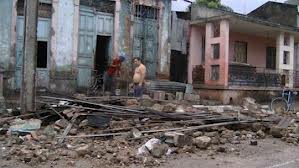
Preliminary reports indicate that the storm inflicted the most severe damage on Cat Island which took a direct hit, and Exuma where there was also damage to homes, downed trees and utility poles. There were reports of flooding and power outages on Acklins Islands and also flooding on Ragged Island. Abaco Island also experienced some flooding, collapsed trees and damage to roof shingles of buildings. There were reports of damage to crops on Long Island and structural damage to homes and roofs of several buildings.
Many homes in the area of Queen’s Cove on Grand Bahama experienced severe flooding with roads in that area being impassable due to the height of the water. Grand Bahama International Airport was also affected by flooding especially in the parking area and the domestic terminal which could not be used to accommodate passengers arriving from New Providence and the other islands. The access road to East Grand Bahama for residents from Freeport was also impassable due to the height of the flood water which was said to have reached as high as six feet in some areas.
There were reportedly two deaths as a result of the passage of Sandy. Officials will be travelling to Long Island, Exuma and Cat Island on 30 October to assess the damage and losses caused on these islands. It is expected that insured losses as a result of Sandy may be somewhat greater than the US$50 million reported for Hurricane Irene in 2011 although they are not expected to exceed US$100 million.
Caribbean Risk Managers Limited
Registered Office
20 Micoud Street PO Box 189 Castries, Saint Lucia www.caribrm.com
Jamaica Office
7-9 Harbour Street Kingston Jamaica
Tel: +1 (876) 922-9604 Fax: +1 (876) 924-9461
Barbados Office
Cedar Court, Wildey Business Park Wildey, St Michael BB14006, Barbados
Tel: +1 (246) 426-1525
Fax: +1 (246) 426-1704
Caribbean Risk Managers Limited ©2012 All rights reserved; no part of this report may be reproduced, stored in a retrieval system, or transmitted in any form or by any means, electronic, mechanical, photocopying, recording or otherwise without prior written permission of the copyright owner.
This report has been made available to you for limited use, you shall not sell, exchange or make any commercial use in whole or in part without the expressed written permission of the copyright owner or without the granting of the appropriate license for such use.
All trademarks are hereby acknowledged.
The information provided in this report is offered, without prejudice, for the purpose of informing the party commissioning the study of the results of the study, and has been prepared subject to constraints imposed on the performance of the work. While Caribbean Risk Managers Ltd believes that it has acted honestly, reasonably, and in good faith, it accepts no responsibility or liability, jointly or severally, for any decisions or actions taken by the commissioning party or others, directly or indirectly resulting from, arising out of, or influenced by the information provided in this report, nor does it accept any liability to any third party in any way whatsoever, (including but not limited to the following) that:
(i) the contents of the report are suitable for any purpose; or
(ii) the implementation will not infringe any third party patents, copyright trademark or other intellectual
property rights.
Caribbean Risk Managers Ltd, its subsidiaries, affiliated companies, successors and assigns, officers and directors will not be liable for any direct, indirect special or consequential damages arising out of any use of the report or the performance or implementation of the contents thereof.
This document contains proprietary and confidential information and is issued to the commissioning party for their use alone. Onward transmission of this document, in any form, is prohibited without the written consent of both the commissioning party and Caribbean Risk Managers Ltd.